
ELECTRICAL COMPONENT SELECTION
Electric Components Selection
A range of electrical components were explored to ensure stable performance, ease of integration, safety, and future scalability. Each component was selected based on reliability, compatibility, availability, and suitability for commercial café environments.
Safe & Reliable
Components chosen for stable operation, protection, and long-term durability.
Easy to Integrate
Widely supported components with strong community and documentation.
Efficient Scalable
Low power consumption with capability to support future features.
Accesible & Available
Readily available components for faster prototyping and production.
ESP32 Running WLED
WLED is a highly popular, free and open source software designed to run on cheap ESP32 boards that power and individually control addressable LED strips to bring vibrant and customisable smart lighting to homes, spaces and projects like this.
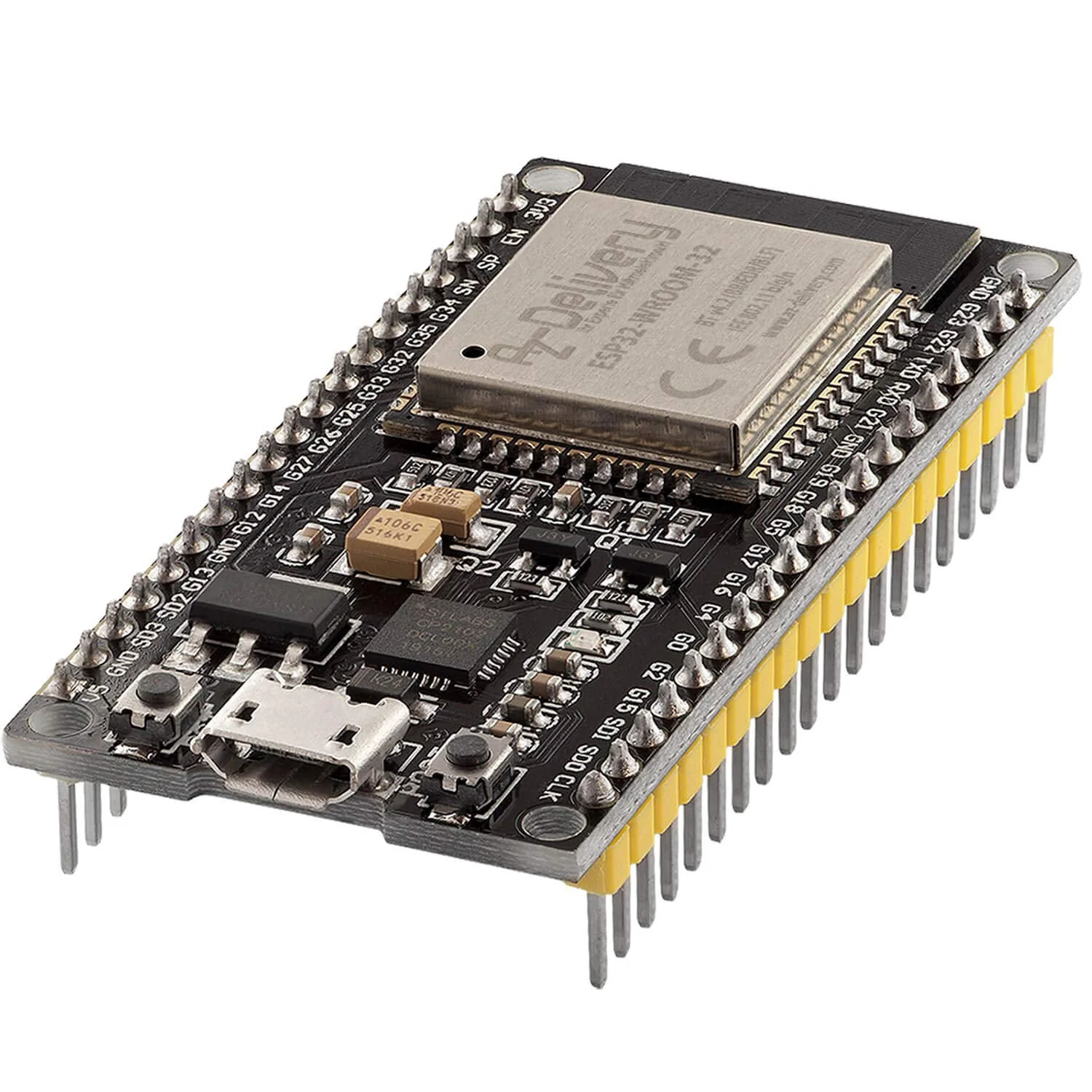
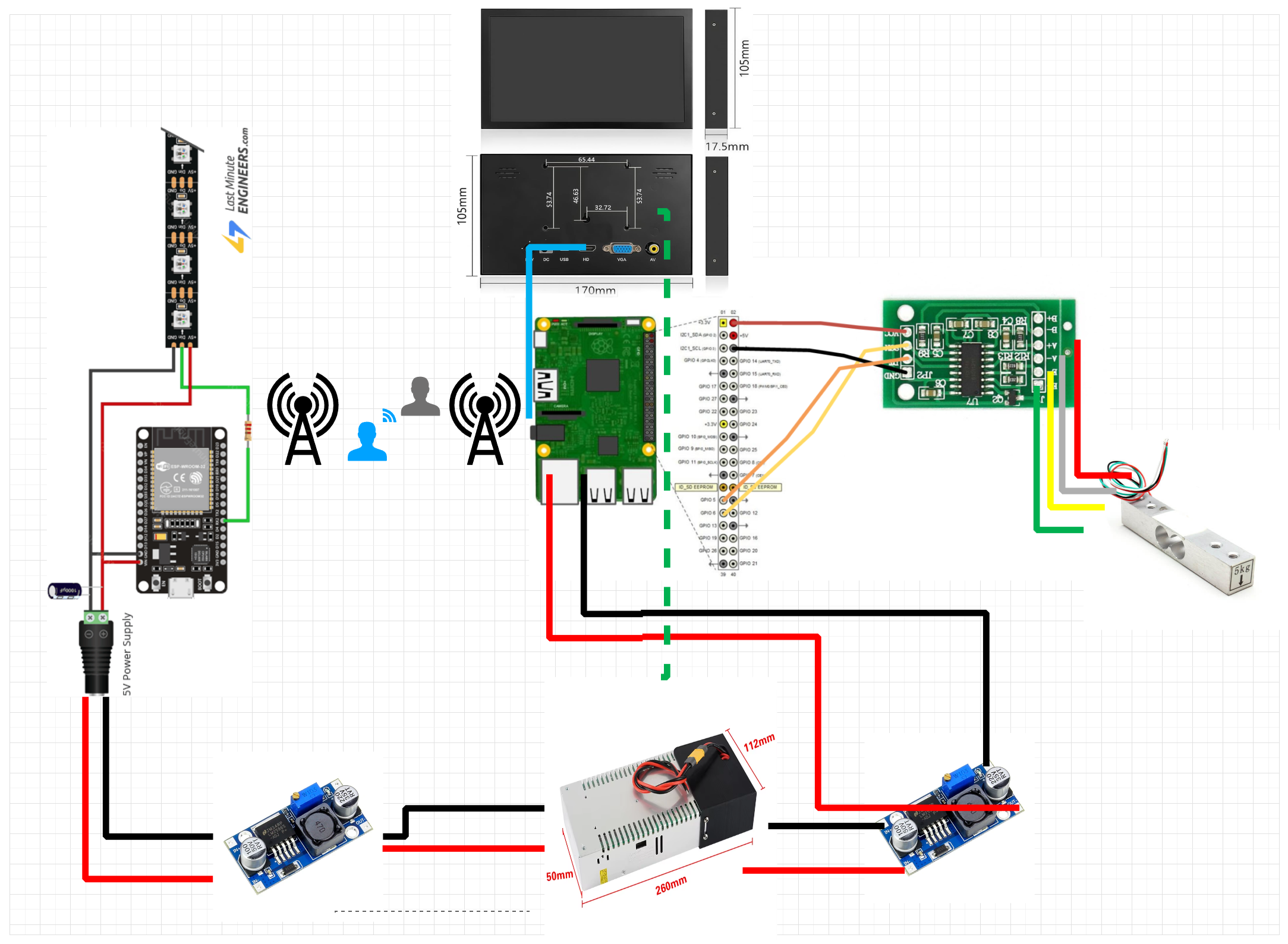
A simple addressable strip was connected and powered from the ESP32 which was flashed with the WLED software. On the local network it can be controlled via a web panel or in our case controlled via an API call on the network. Which means if we wanted to expand or BSK wanted the LEDs more prominent - lets say on the wall that can be achieved as this is a separate system to the main device and not physically connected - its wirelessly controlled!
Raspberry Pi 4
A powerful credit card sized computer that outputs the video to the screen for the project. This linux based system has many IO ports as well as GPIO for our load cell system and only draws 5V of power. Incredibly simple yet powerful.
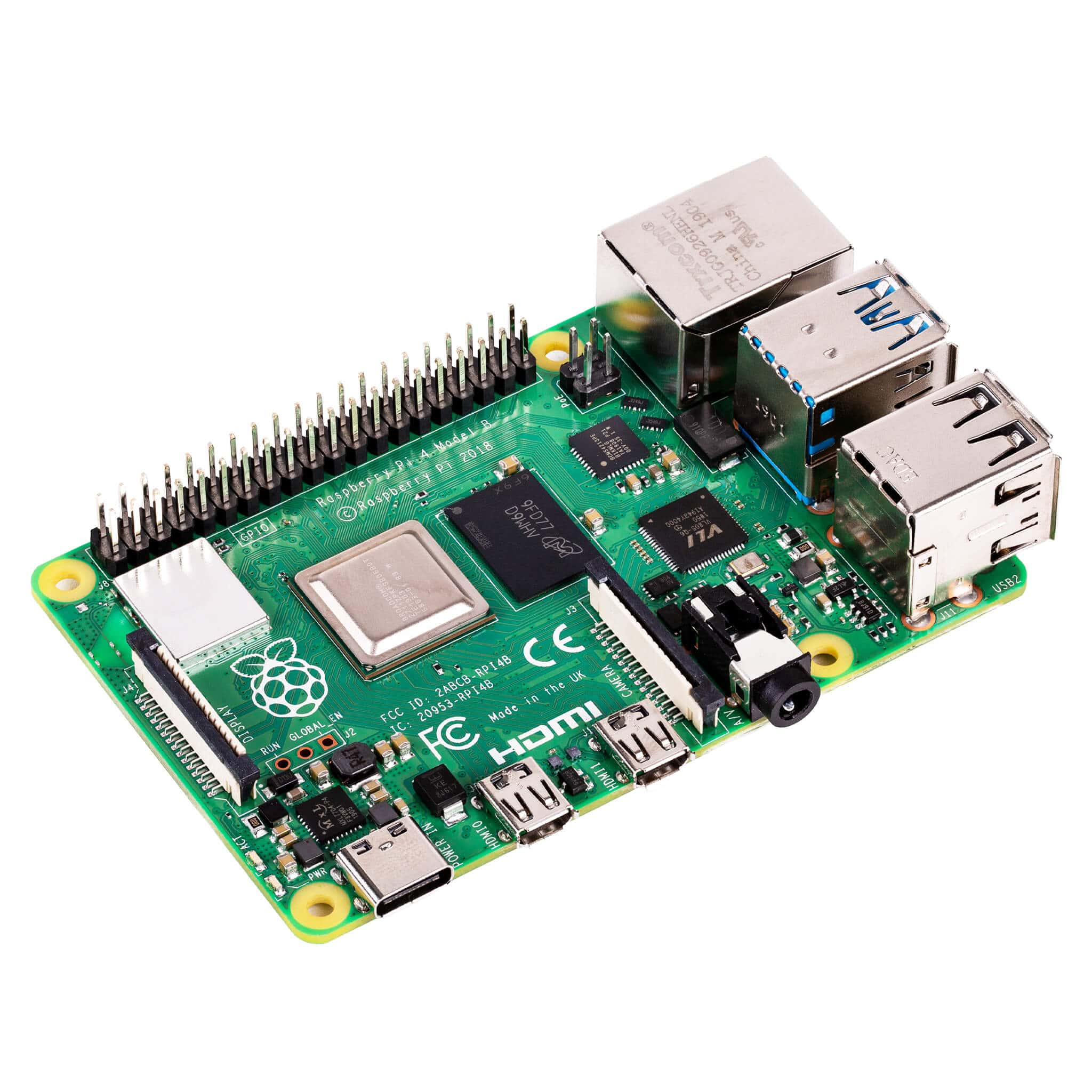
The Raspberry Pi 4 could display the webpage that the whole system runs on, whilst in the background it can also be doing many other things! In our case whilst its displaying the webpage, a python script that exposes the load cell via the GPIO pins on the board get relayed to the local network via a Websocket server that its running, this then reports all the live measurements that the loadcell is reading to be exposed and grabbed by the website which is expecting to see this, and uses that data to help coffee making be simpler.
7 Inch Portable Mini Monitor
We needed a high resolution digital TFT monitor to display the coffee making steps, this ruled out normal screens you’d use with Arduinos and Raspberry Pis as they are too small. This form factor fit our proportions for the project as well as nailing the resolution and the addition of speakers. It runs on 12v.
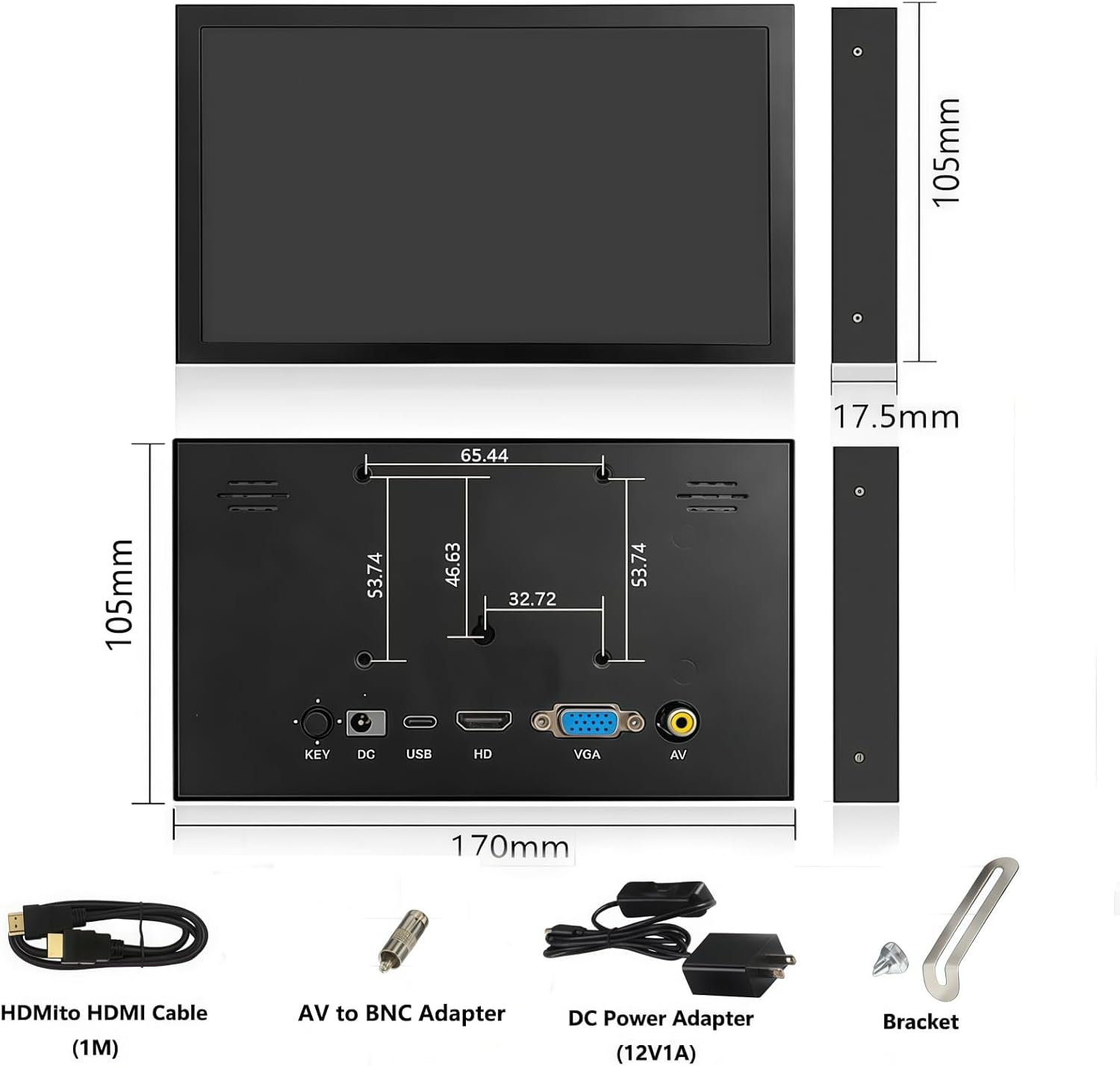
The Raspberry Pi 4 outputs straight to this via the HDMI cable - this also provides a channel for the speakers. The monitor is powered individually on its own 12V rail since everything else runs on 5V. A simple screen with a great resolution, speakers and form factor and an amazing view angle since we are using it in a portrait mode. A great starting point to build upon.
5KG Load Cell + HX711 Amplifier
A physical sensor that converts force or weight into measurable electrical signals. When combined with a Raspberry Pi and the HX711 Amplifier board. The electric signals from it is incredibly tiny, it requires a specialized chip to boost the signal and convert it into data that the Pi can process.
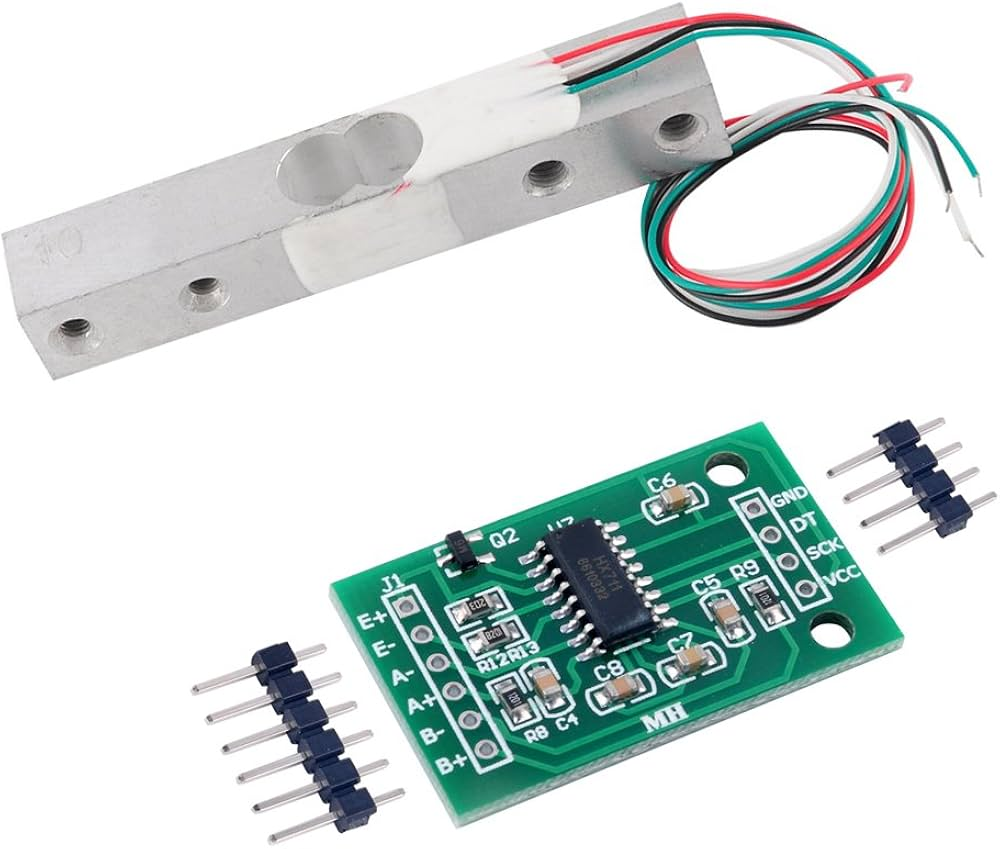
5KG is the smallest load cell that the manufacture for this form factor produces. Which is more than enough allowing a large amount of headroom for us. Coffees will never get to 5KG weights. This attached to the HX711 Amplifier and the Raspberry Pi 4 allows us to measure the weight of coffees and use that data to help users create coffees easier.
Find out more about materials or go straight to the product?
Materials Exploration
Take me there!
Final Product
Take me there!